When a couple decides to get married, one of the first steps they would do is to see if their horoscopes align. Your horoscope is the alignment of the stars and planets during your birth, which can help tell a lot about you. (You can find out what your horoscope is through a horoscope calculator) An astrologer matches the horoscopes of the couple and sees if the horoscopes match. This is done before wedding preparations begin in order to ensure if the union is ideal to continue with the marriage. The way it works is that the astrologer gives the union a score based on different categories called Gunas. In total, there is a score given out of 36 that identifieswhether or not the couple would be good together or not. Ideally, the score should be above 18, as that indicates a good match.
Naandi Puja
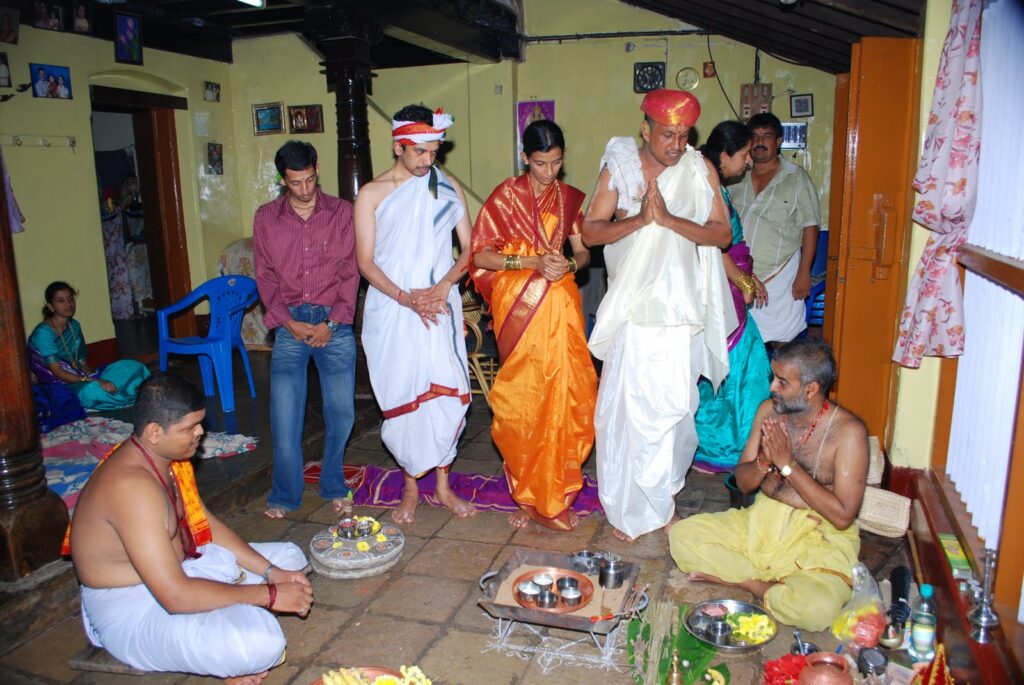
The Naandi Puja is done 10 days before the start of the wedding preparations in order to invoke the blessings of the gods and the ancestors to ensure a hindrance-free ceremony and blessings for the upcoming days. The puja symbolically marks the beginning of the marriage season.
Mehendi
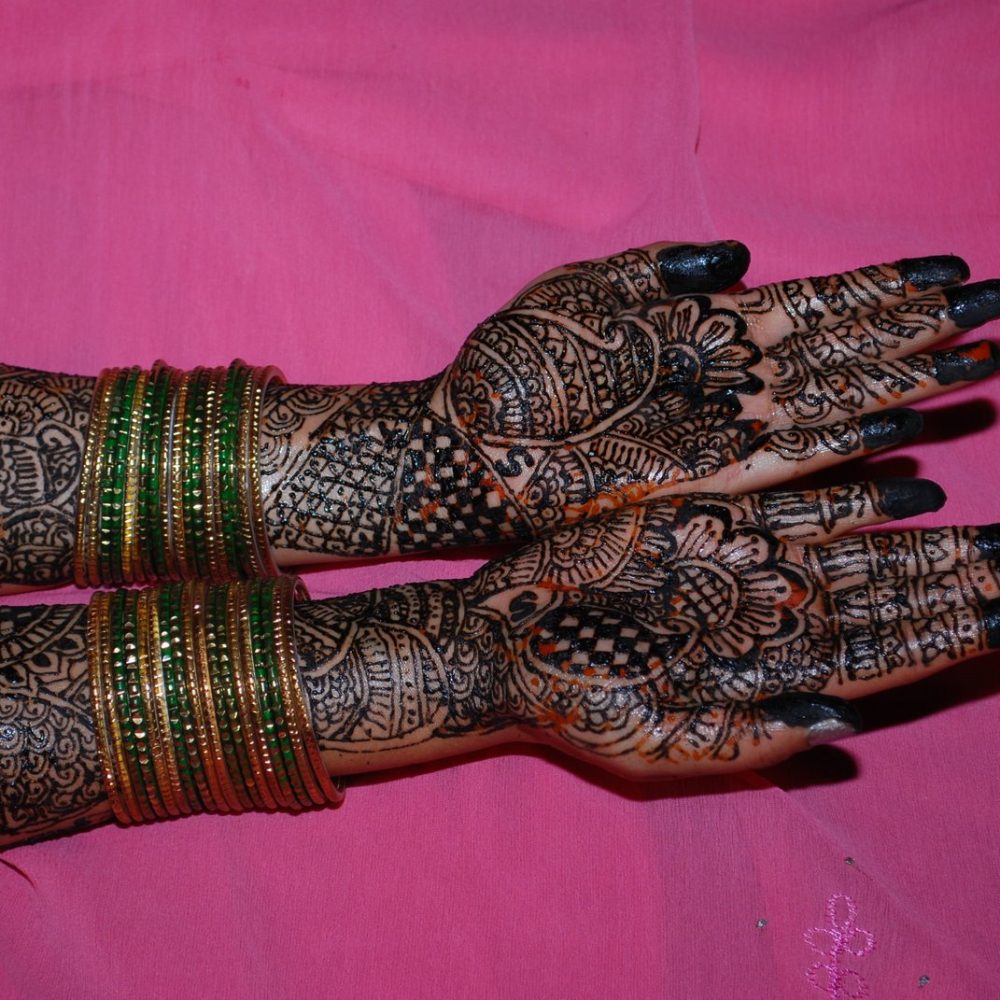
The Mehendi is one of the more modern GSB wedding traditions, where the bride gets an elaborate henna design, traditionally known as mehendi, which is a paste made from crushed Lawsonia inermis leaves, which is usually used for decoration of the skin, or for dyeing hair. The design covers both the arms and the feet of the bride, ranging from the fingertips to the elbows on the arms and from the toes/feet to the knees on her legs. It depends on the design, but some designs have a bride and a groom on the palms, so that they meet when the palms touch, however all wedding mehendi designs tend to be very detailed and intricate, sometimes with hidden details for the groom to find.
In the more modern tradition, everyone gathers at the house of the bride to have mehendi applied to them. Although it is usually the females of the family who have mehendi applied to them, anyone can get mehendi. They all gather because it is usually 2-3 professional mehendi artists who come to apply the mehendi of the bride, so they apply it to the guests as well. Usually in the case of the bridal mehendi, the design is left to sit for around 30 minutes, after which it is sprinkled with lemon juice, sugar syrup or oil to dampen it, after which it sits for another 2-3 hours. This allows the mehendi to be scraped off easily later instead of washed, in order to not spoil the pigment of the design. There is a fun belief that the darker the color of the bridal mehendi, the more love she will get from her groom, and the happier they will be.
Haldi
Konkani for ‘turmeric’
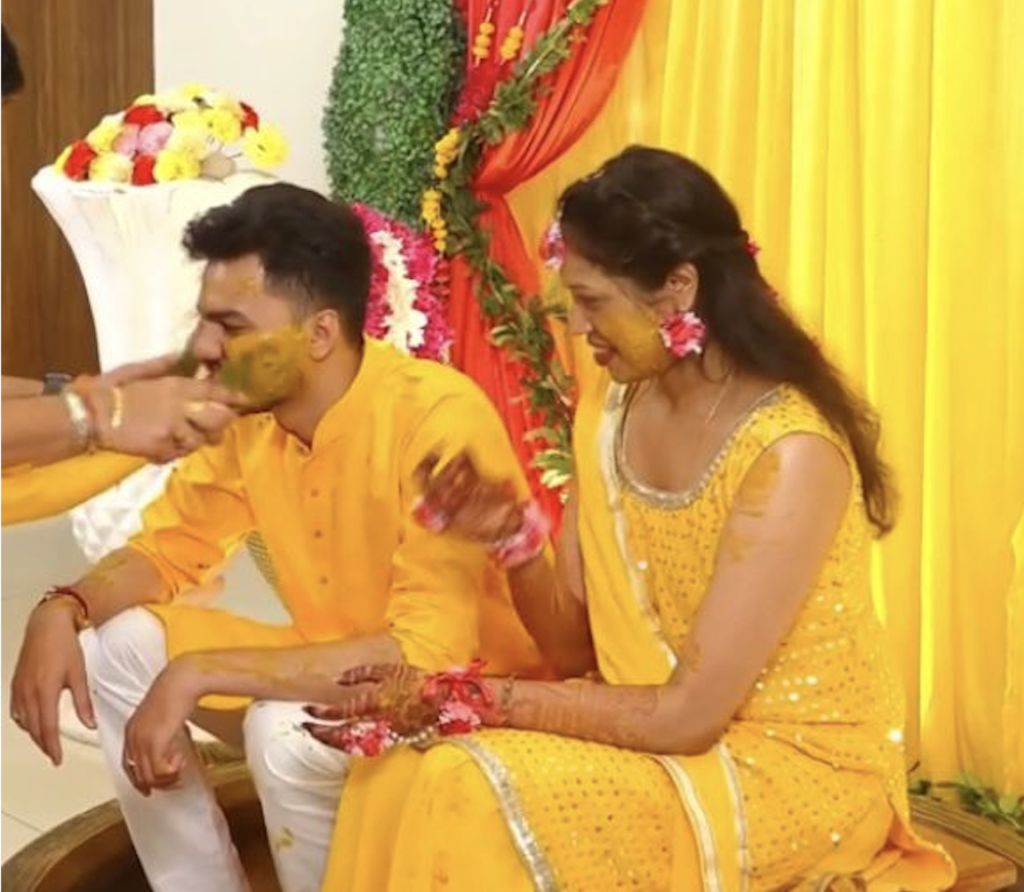
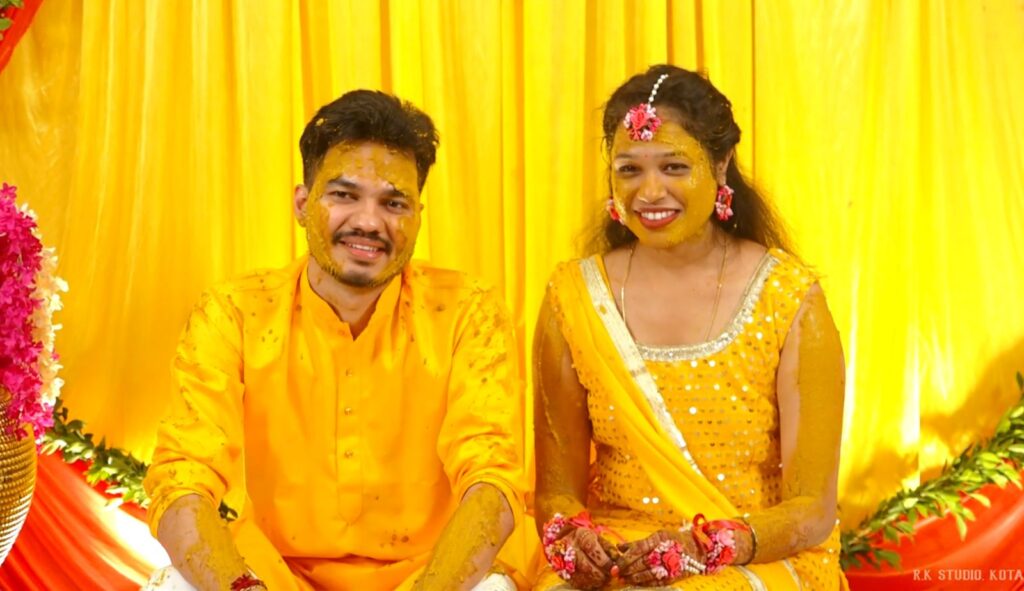
The Haldi is a more modern tradition and is becoming increasingly common in GSB weddings these days. During the Haldi, turmeric paste is applied on the face, arms and legs of the bride and groom (anywhere that is deemed appropriate) using neem leaves. Later, the turmeric is applied to the guests as well, by the guests themselves. Accordingly, everyone wears yellow in order to hide the Haldi stains. Although the Haldi commonly takes place one day before the wedding, it can also take place on the day of the wedding, though this is uncommon. The Haldi is a familial event, marked with dance performances and performances by loved ones. Not only is it a nice festival to be with loved ones and to celebrate the bride and groom, the turmeric that is used has numerous health benefits. Turmeric removes blemishes and leaves the skin clear and glowing, simultaneously protecting it from infection through cuts, bruises or other ailments through its antiseptic properties. Turmeric also helps with the exfoliation and detoxification of the skin, which helps the couple look their best before the day of the wedding. Finally, turmeric is also used for warding off evil spirits and the evil eye, and its yellow hue is seen as an auspicious color, good for prosperity and new beginnings.
Wedding Day
Prarthana
The Prarthana is a small puja that is done before the start of all the wedding rituals, that is done seperately by the bride and the groom at their respective homes.
Yedur Kansani
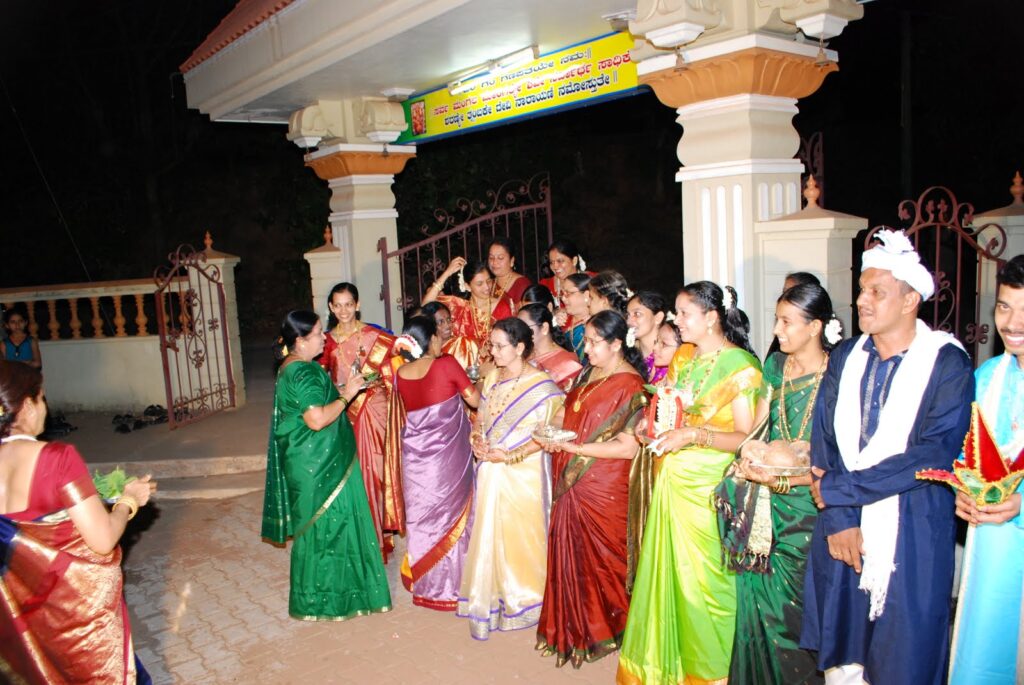
On the day of the wedding, the brother of the bride goes to formally invite the groom’s family to the venue with a container of laddoos ( a round Indian sweet that is made with different recipes, the most common one being the motichoorladdoo, which is made of basin flour). The groom’s family then goes to the venue, where they are greeted by the family of the bride upon arrival. The YedurKansani ritual is done to greet the groom’s family as they ‘meet’ at the wedding venue. The females from the bride’s family welcome them by sprinkling rose water on them, for a good scent after the long journey, giving them flowers, which serve as accessories, and by showing them all a symbolic mirror, which allows them to check their appearance. This ritual is done not only to welcome the family of the groom, but also to help them freshen up and prepare for the wedding after their journey to the venue.
Phool Muddhi
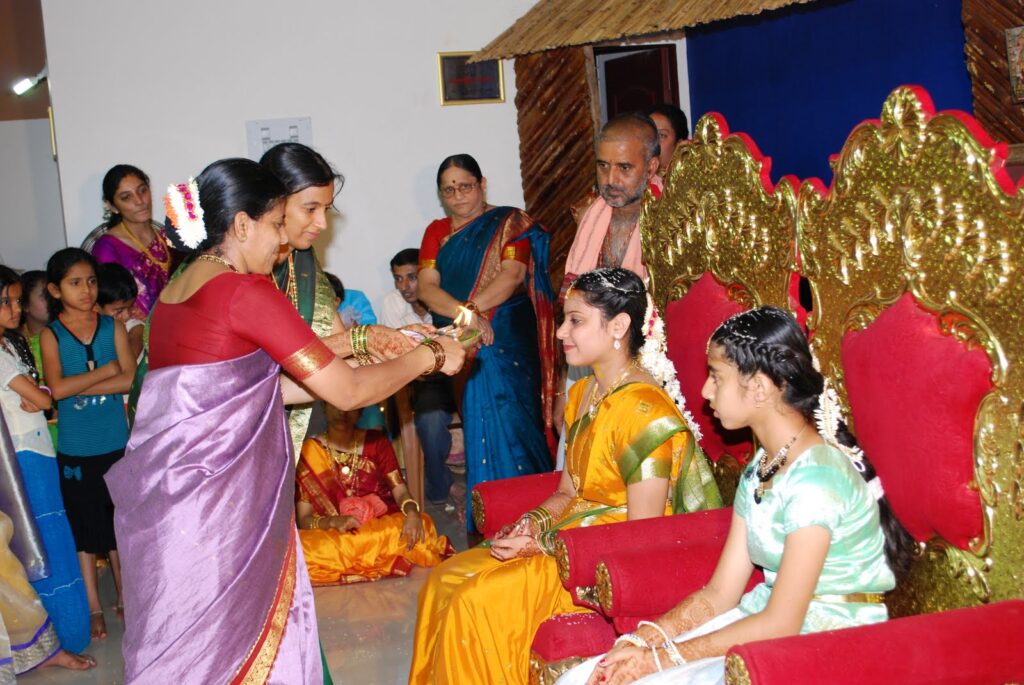
During the Phool Muddhi, the groom is gifted a ring and a new set of clothes from the family of the bride, and the bride is gifted a garland of jasmine flowers and new clothes from the family of the groom. The groom and the dheddo (younger brother or cousin brother of the groom, usually the next one to get married, who joins the groom on stage during certain rituals) take place on the stage. The father of the groom then washes the groom’s feet and presents him the clothes and the ring, such as to prepare him for the wedding.
In this image, the bride and the dheddi (younger sister/cousin sister of the bride) are sitting on the stage, and the rituals are being performed by the groom’s family.
Urdha Muhurth
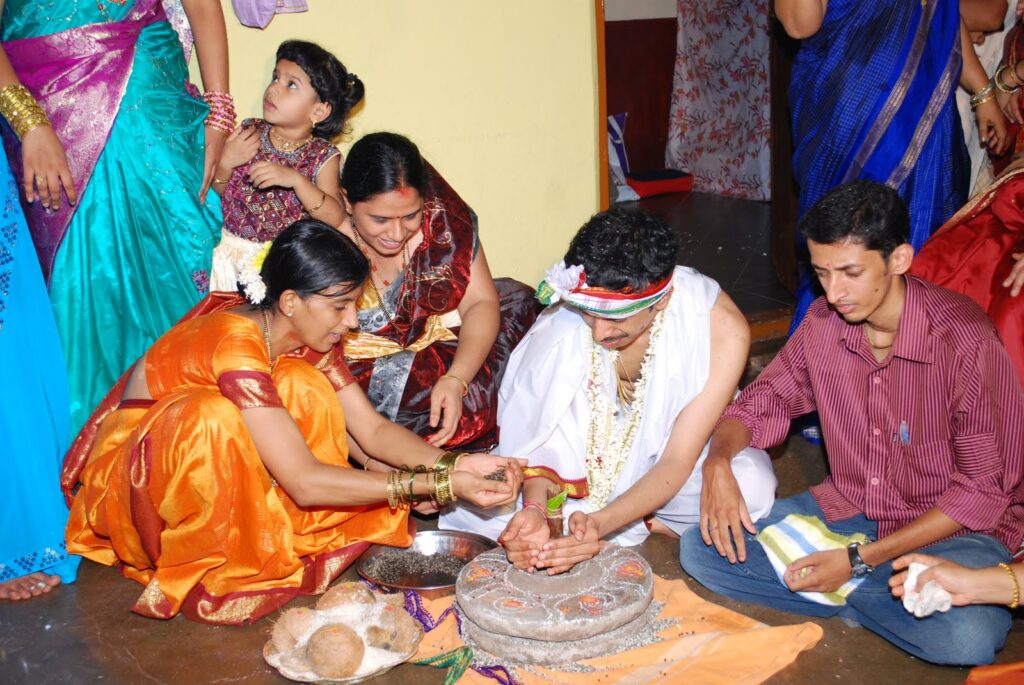
The Urdha Muhurth is a ritual that allows both the bride to bond with her bridesmaids and other females in the family by grinding Urad dal using a typical stone grinder. Urad dal is a lentil that is commonly used in GSB cooking, hence its usage in this ritual. Typically, the groom performs the ritual with his groomsmen as well, and the ritual shows the bride and groom interacting with their family and helps fosters bonds between them.
Kashi Yatra
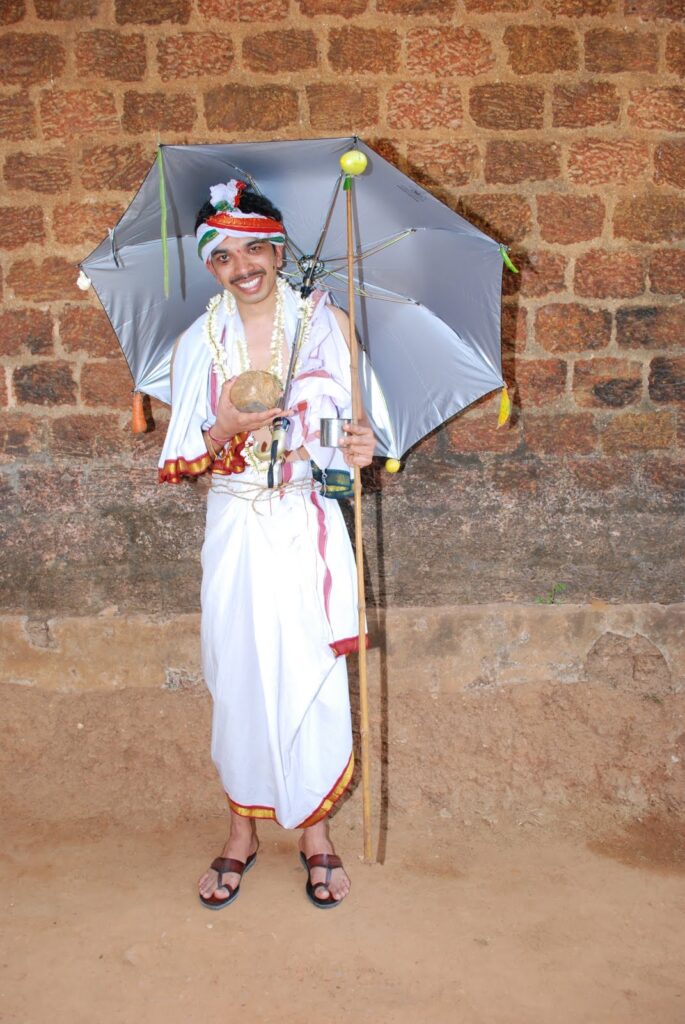
The Kashi Yatra is a playful, yet important custom done during or before the wedding, where the husband takes an umbrella, sandals and a small pot, saying that he is going to become a pilgrim and go for a pilgrimage to Kashi. He says that he is going to live the life of a monk, and the bride’s father then states that he cannot go and tells him to come and marry his daughter instead, convincing him of the “merits of matrimony. The groom then takes God’s blessings and decides to get married. It is done as a sweet reminder that the couple will now go on their spiritual journey in unity, and that they will go through matrimony and life together. It also shows how even the most educated will have to find a balance between their married life and their spirituality.
Dharemani
While the groom is going for his Kashi Yatra, the bride is getting ready for the next stage of the wedding by changing her saree (the dress she is wearing) After the bride has changed, she comes to the stage, where her mother comes to the stage and presents her with the Dharemani necklace. The necklace symbolises that the family of the bride has agreed to ‘give her away’. (This is reminiscent of the olden times, not literal!)
Mantave Hadche
Konkani for “bring them to the dais”
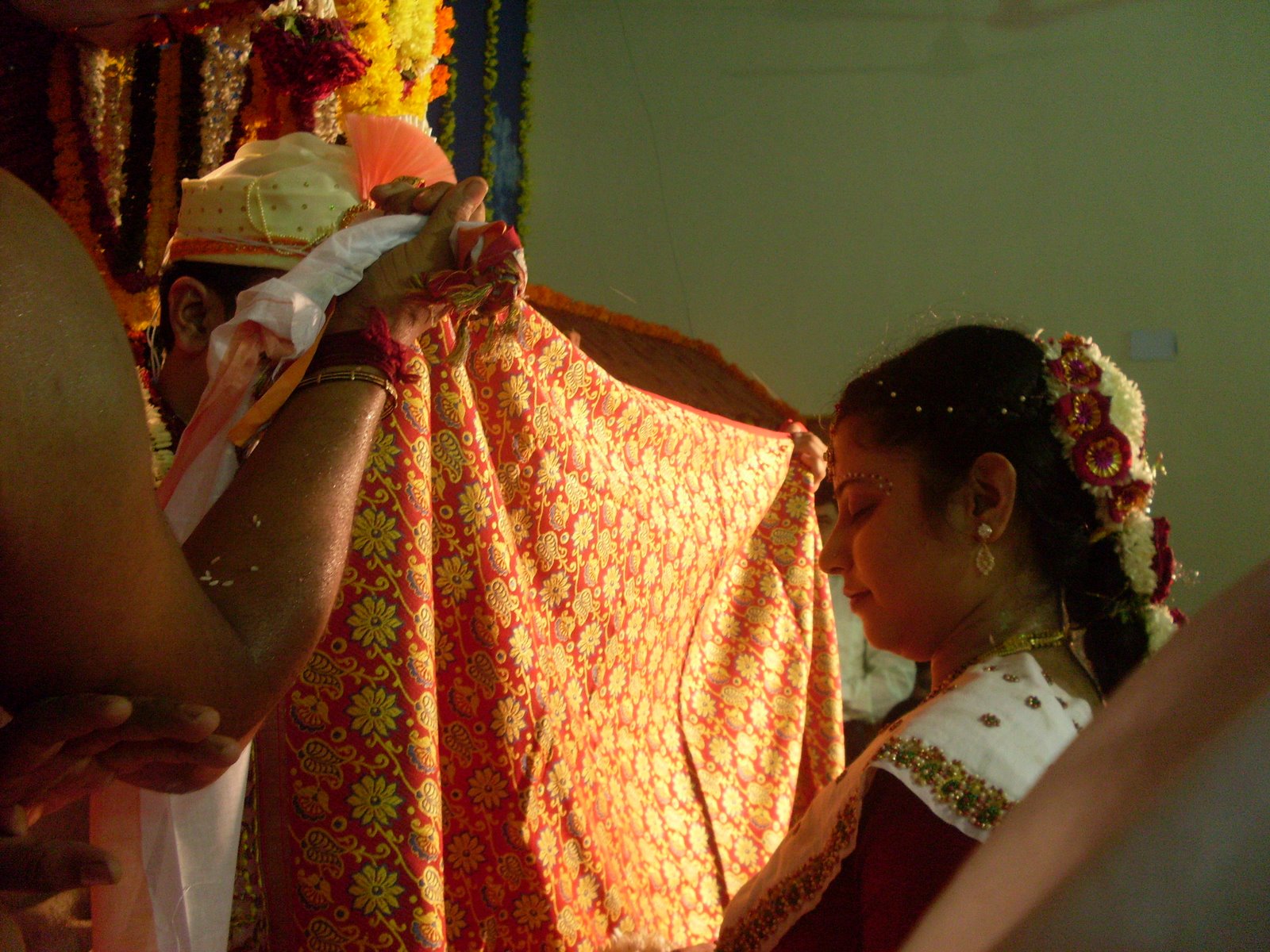
For this tradition, the father of the bride walks the groom down the aisle, and the priest holds a silk cloth (the partition) in front of the groom, so that the couple cannot see each other, as they are only supposed to see each other during the time of the ceremony. The maternal uncle of the bride brings the bride down the aisle, and both the bride and the groom carry flower garlands.
Muhurth - Auspicious time for the start and finish. Based on the Hindu zodiac of the bride and the groom. Due to time constraints, the Muhurth is the timespan for the three rituals listed below to be completed.
Maladharan
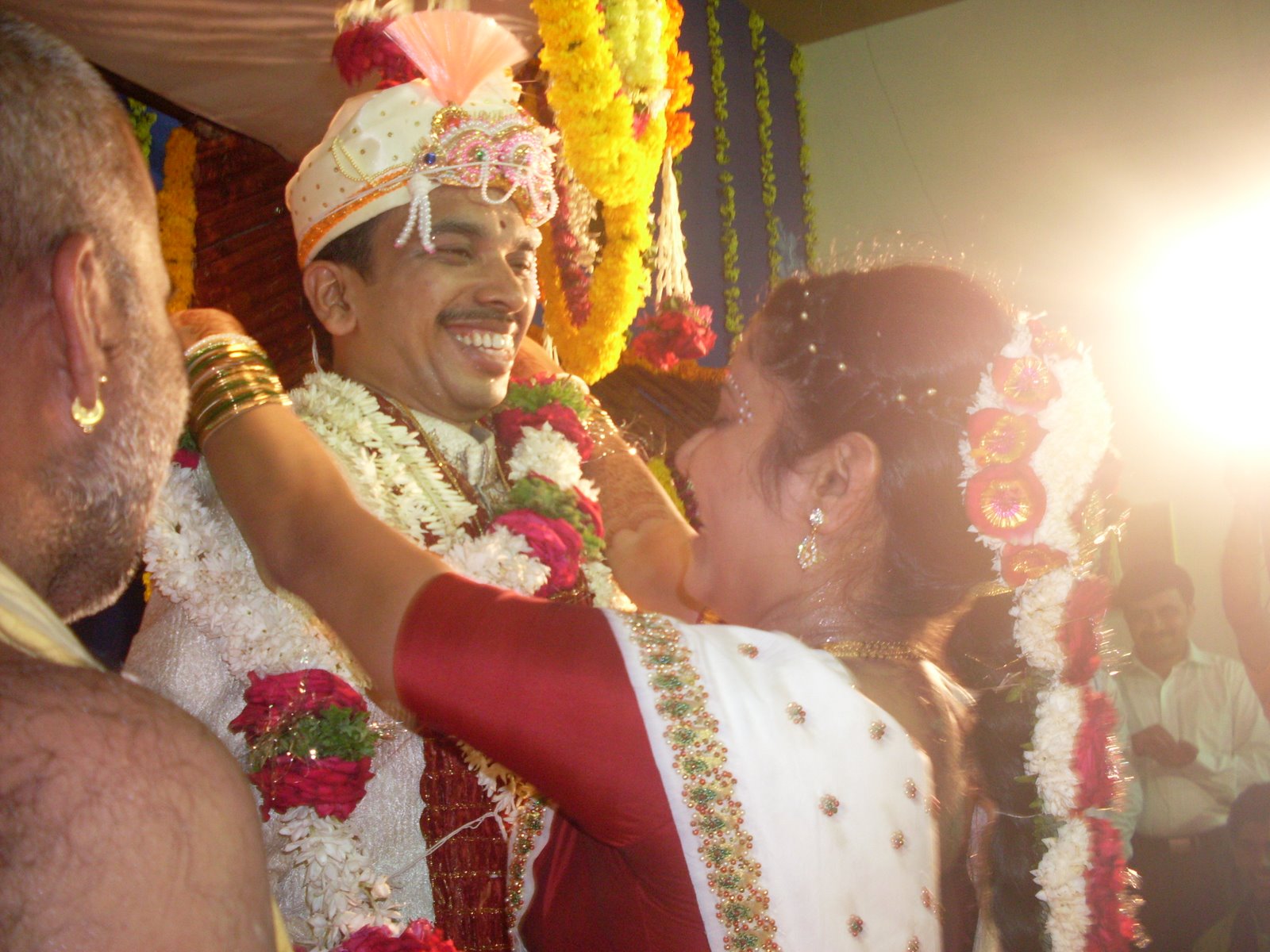
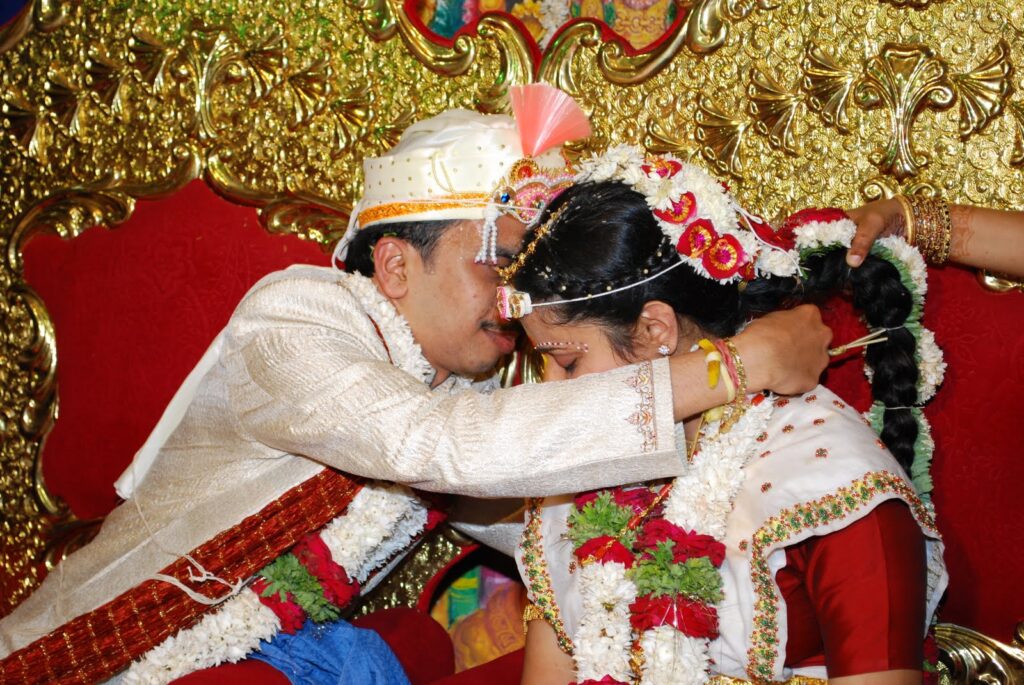
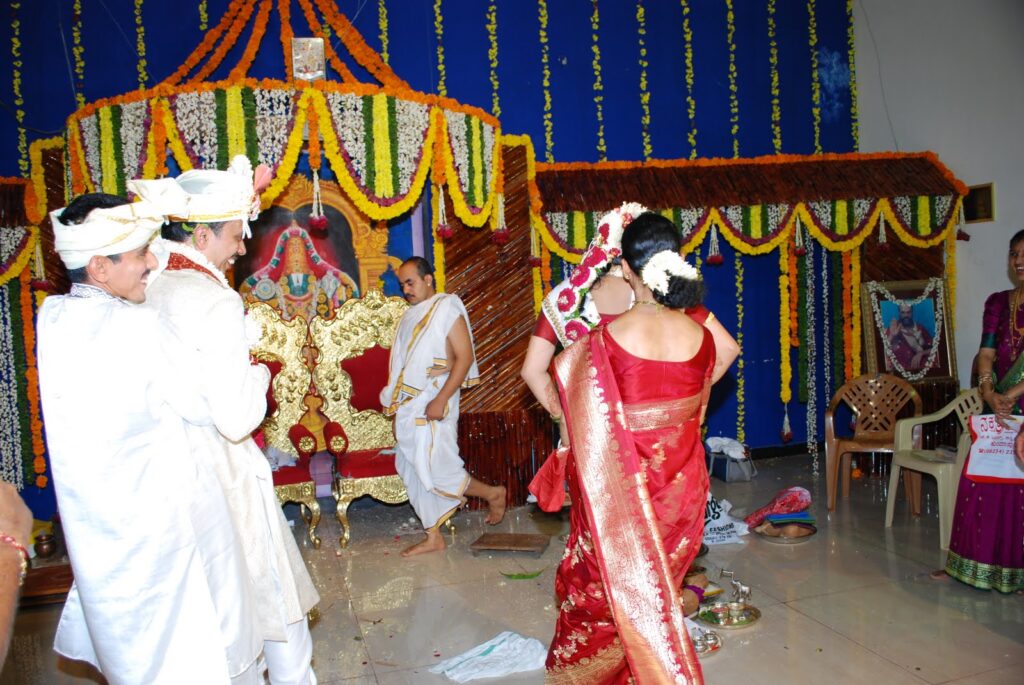
While the partition is still up between the couple, the priest chants prayers and talks about the significance of marriage and married life. He then offers his blessings, and the partition between the couple is removed. The bride and groom then put the flower garlands around each other’s necks, and occasionally, the bride or groom is lifted up, so that putting the garland on is harder for the other spouse (the groom is being lifted up in this photo, so it is harder for the bride to put the garland on ☺︎)
Kanyadhan
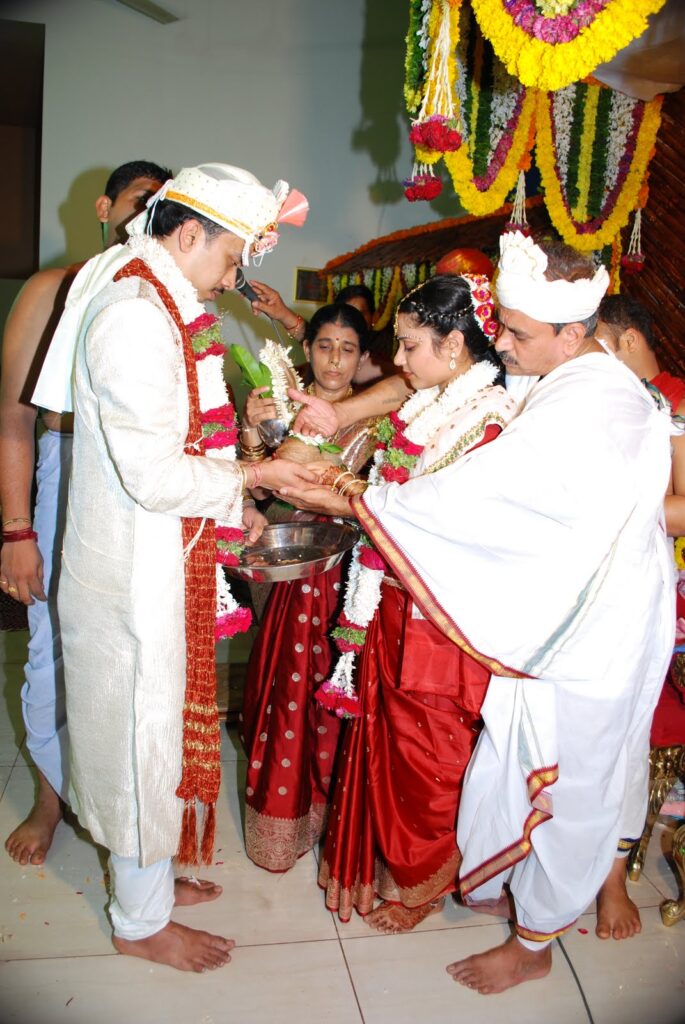
The bride’s parent, usually the father of the bride, places the hands of the bride in those of the groom along with a flower and a coconut. It serves as a quite literal symbolism of the father giving the groom his wife’s hand in marriage.
Kasthali
The bride is presented the Kasthali, a necklace that is then worn by the bride, which shows the married status of the bride, and pronounces them husband and wife.
Concluding the Wedding
Var Pooja
In the GSB wedding tradition, the wife is given a new name after her marriage, and this puja is hence conducted to honor the courage of the bride as she takes her new name, and to honor the daughters who underwent this change before them (the name is symbolic, and the wife can opt to still be called by her normal name). All of the married sisters and cousins are called on the stage and are given gifts by the parents of the bride.
Post - Wedding
Laaye Shaal
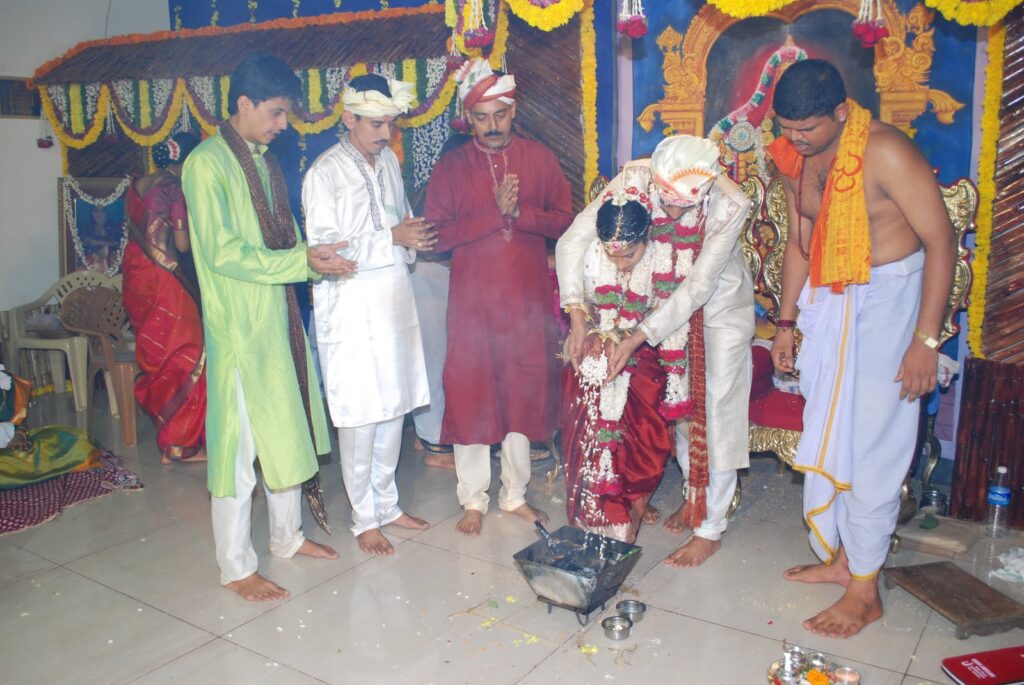
The sacred fire pit is set up in the middle of the stage, and kindled by adding puffed rice, called Laay. This is the same sacred fire which the couple later performs the Sapthapadi in the presence of. Finally, the eldest uncle of the bride presents her with two toe rings, worn on the second toe indicating the married status of the bride.
Sapthapadi
Konkani for “seven steps”
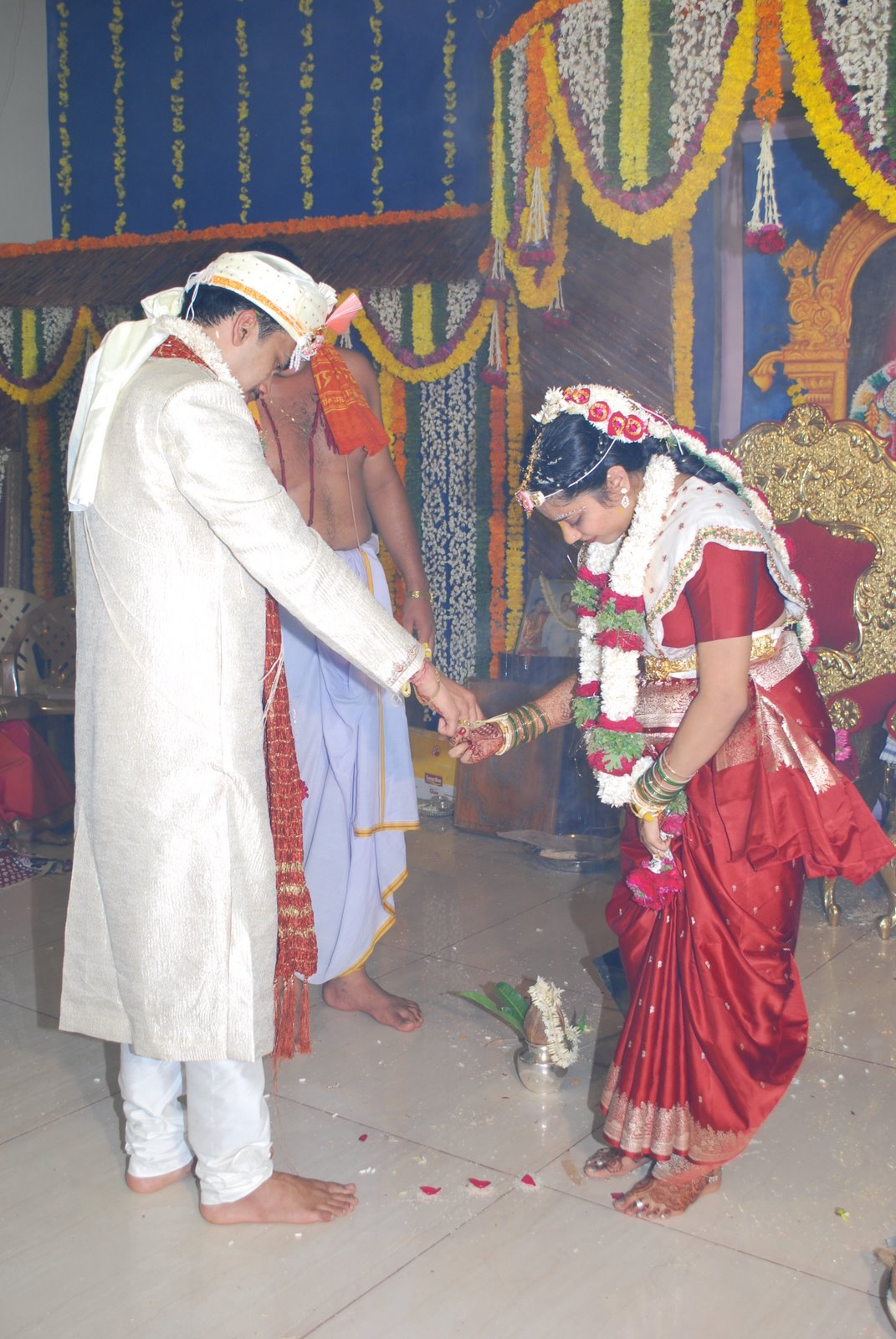
In this ritual, the bride and groom hold hands and take 7 steps on 7 mounds of rice in the vicinity of the holy fire. Each step symbolises a promise they will keep during their marriage.
Var Ubarche
The bride’s aunt and uncle lift the bride and groom in 5 steps.
Khele Kavoche
Konkani for ‘feeding banana’
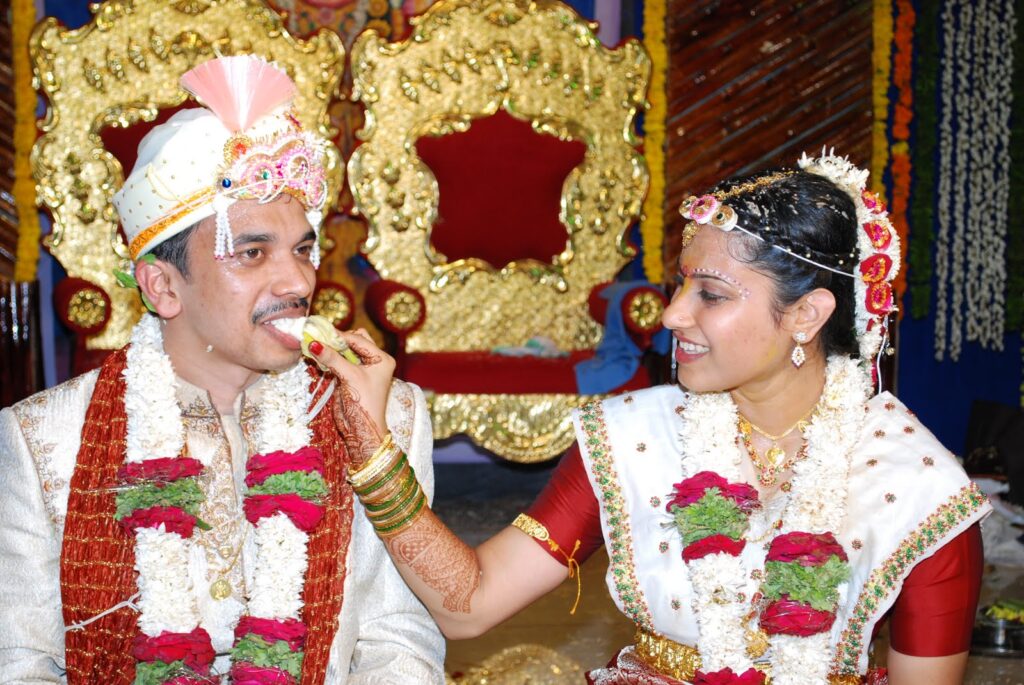
The couple feeds each other a banana, power food after a day of exhausting rituals.
Baglari Bosche
Konkani for “sitting on the door(step)”
This ritual happens typically when the bride reaches the house of her husband. The sisters of the husband ask the husband for gifts, which is reminiscent of the past tradition where the sisters would bargain for family rights, as they believed that their brothers family line would now have all the rights (e.g. if you have a son, you will marry him to my daughter) However, in modern times the tradition is simply to ask the brother for gifts instead.
Vokkuli
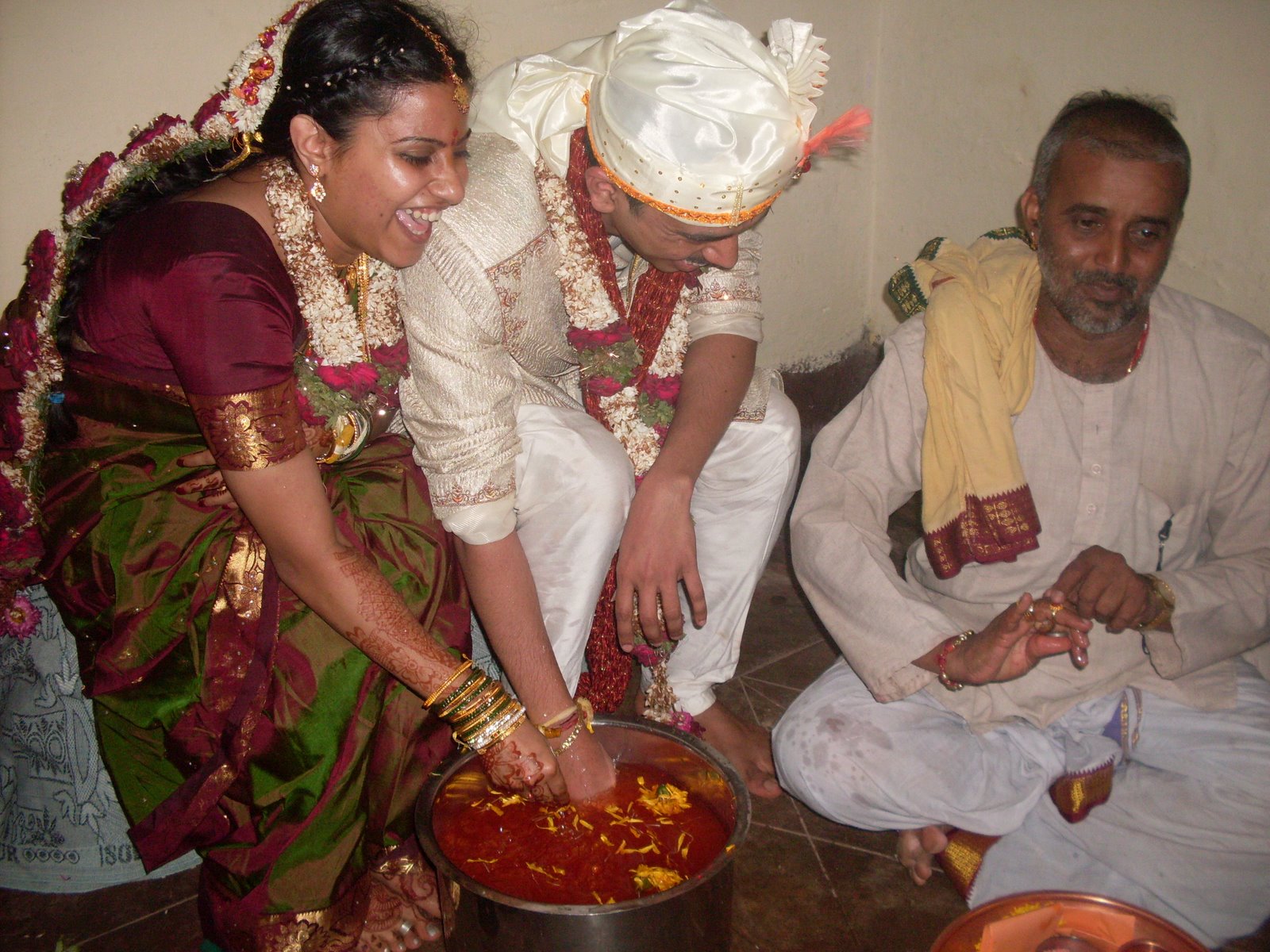
After concluding the wedding, a small game is played known as Vokkuli. The game is played with the bride and the groom, where they both need to look for a ring in the bucket of water mixed with kumkum (vermillion). The belief is that whoever finds the ring first would be ‘in charge’ in the relationship.