Childhood
Munjhi (Upanayana/Brahmopadesham)
The Brahmopadesham, otherwise known as Munjhi (In Konkani) or Upanayana, is also referred to as the holy thread ceremony, as it commemorates the wearing of the holy thread, known as Janau. The significance of this tradition dates to the olden times, where the ritual signified that the young Brahmin boy was read to give up his worldly possessions and that he was now ready to live a life of learning. However, now in the modern times, it represents that the boy is ready to follow the disciplined, controlled lifestyle of a Brahmacharya. It also signifies that they can now participate in Vedic functions, do Sandhyavandhana and other rituals.
The ritual itself has different components, some main ones being shaving part of the head, symbolic begging for alms and the last feeding by the mother. These can be broken down like so:
- Bhiksha: The boy asks relatives for alms, which is a reminiscent of the old lifestyle of the Brahmins, as they used to solely live off alms from others.
- Mathru Bhojana: This is where the mother of the boy feeds him with her hand for the last time, symbolising that he is now growing up, and that she must overcome her maternal love for him as he transitions from childhood into adolescence. After this, five other boys who have already had their Munjhi eat with him, creating a bond and securing a friendship between them.
Other than that, there are also other parts of the ceremony that should be mentioned;
- Gayatri Mantra: The boy is taught the holy religious hymn, the Gayatri Mantra. This ceremony is conducted under a cloth, to preserve the sanctity of the mantra.
- Palasha Branch: The Palasha Branch is given to the boy, representing that he is now a guardian of the Vedas, the holy Hindu religious scriptures.
- A prayer to the sun god, Surya.
- Deverasamardhane: Worship of the Kuldev, and preparation of traditional festive food.
- Mangala Drowya: Ceremony where married women are given sacred items from the mother of the boy.
- Naandi: Puja to get the blessings of the ancestors.
First Cycle Ceremony
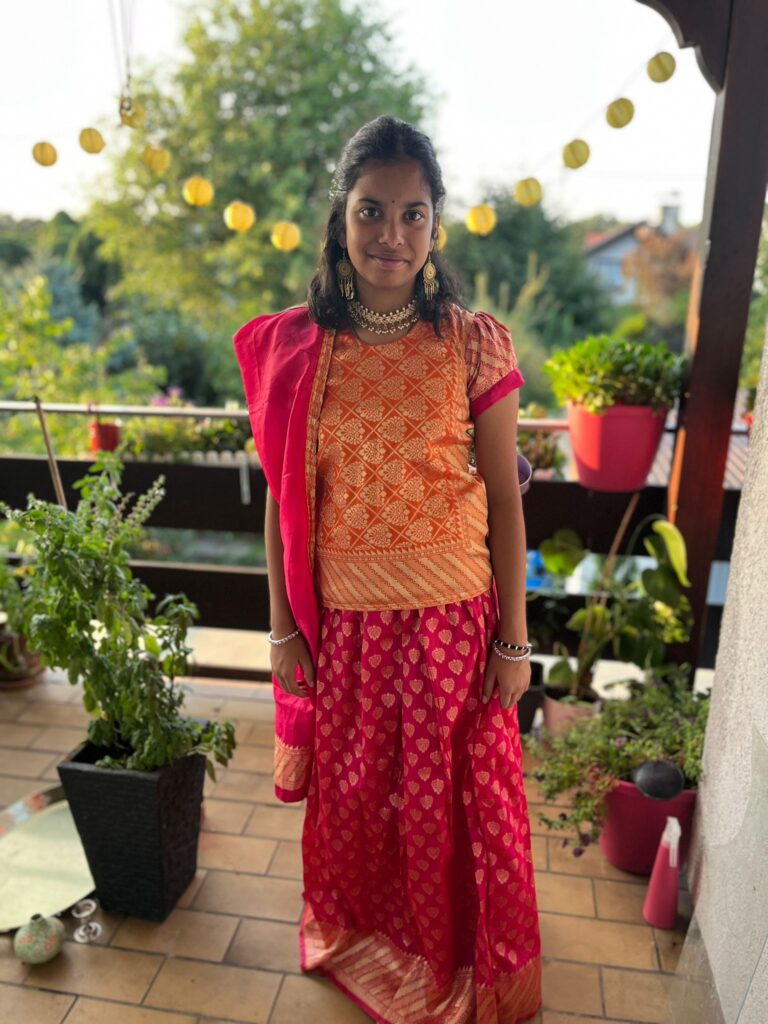
This ritual is a joyous occasion and marks the young girls transition from childhood into adolescence, following the completion of her first menstrual cycle. The occasion is celebrated in different ways across India and is in some places it is a grand celebration on honour of the girl.
In the olden days, females menstruating were told not to enter the kitchen, not to come into proximity of the altar of the Gods, and not to perform or participate in any religious acts such as prayers or pujas. The reason behind this is not that the females were considered impure, but rather to encourage the resting of the females while menstruating, and to avoid work and labour during this period. The reason not to do puja or prayer was also not because they were impure, rather that the energies of the females and the altar did not align presently, and that they would not be able to properly pray/concentrate on the prayers as of that time.
Hence, also in present day culture, this tradition is still followed, and the girl initially rests for the first 5 days of her period. While the restrictions vary based on location, it is common that the females don’t enter places of prayer during this time, and only avoid the kitchen when naivedya, or prayer food is being prepared. For the first five days of her cycle, the girl only showers/bathes her body, and avoids getting her hair wet. On the fifth day, she takes a shower and washes her hair. Afterwards, she dresses in new clothing (only for the first menstrual cycle) and is then fed a sweet.
The reason why this tradition was so important in the olden days was that the first menstruation of a girl meant that she was now ready for marriage, and the festival served as an indicator for other families that the girl was now ready for marriage. However, this is no longer the case in the modern day, and the festival now serves as a way to honour the girl and to celebrate her transition from childhood into adolescence.