Birth and Infancy
Before Birth of Child
Before the birth of her child, typically in the eight month of her pregnancy, the expecting mother will leave for her parents’ home, if her parents are not currently staying with her. This tradition is typically followed through by GSB women during their pregnancies as the difficult last months and taking care of a newborn is made easier by being in the presence of their family. The new mother can then be taken care of and helped by her mother, and it is a tradition done mainly for the comfort and well-being of the mother.
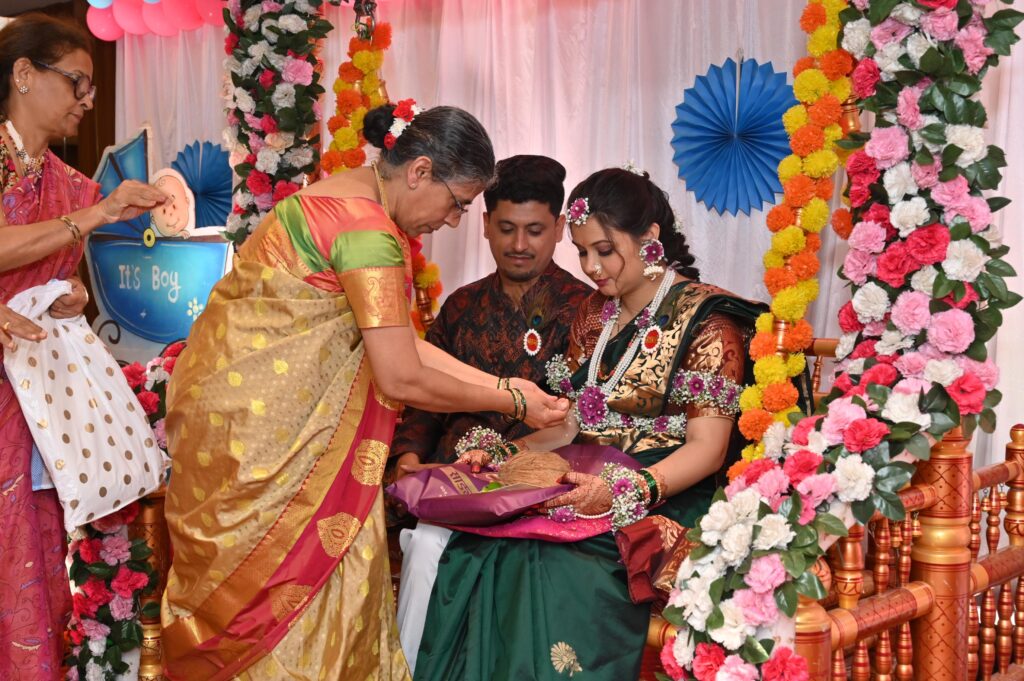
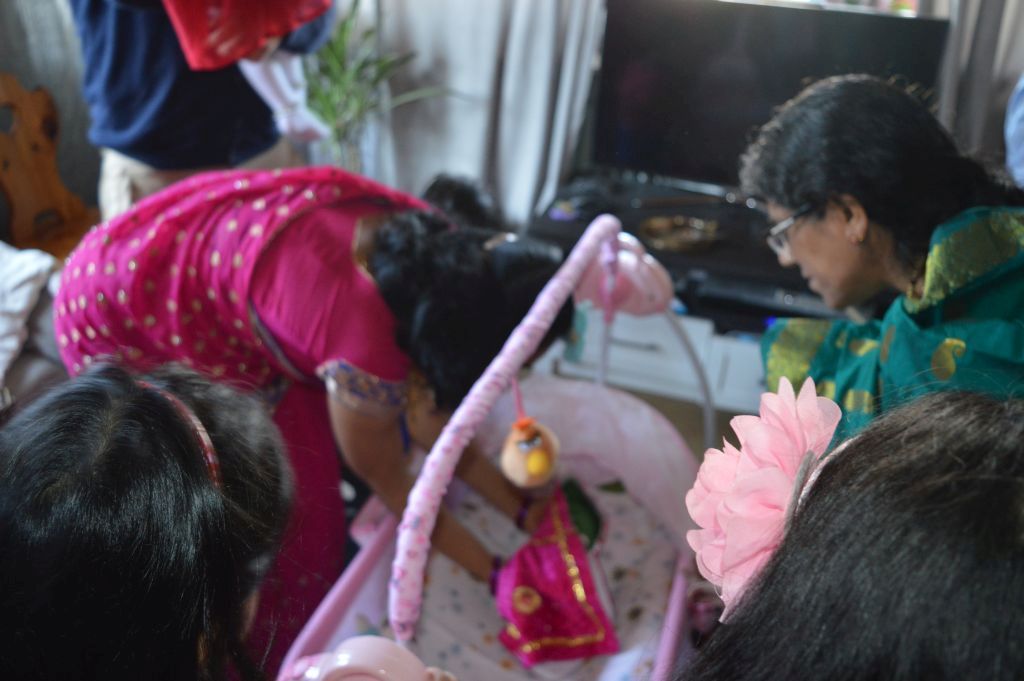
Naming Ceremony
One of the steps of the procedure is the paternal grandmother/grandfather whispers the child’s name into its ear, and the child’s name is written in a plate of rice grains. The ceremony is conducted on the 12th day after the birth of the child because it is believed that this is when the rest period of the mother and the child finishes, and it is considered an auspicious day.
Ear Piercing
In many places around the world, ear piercing can be seen as a show of style and self-expression (which is a completely acceptable motivation of course!), however in India, it is seen as more of a rite of passage, and as a transition from infancy to childhood. Although the reasoning varies per place, some examples of exact reasoning are:
- To protect the child from negative energy.
- To prepare the child for the beginning of learning by preparing the ears of the child to hear the sacred texts.
- As a developer of identity and as an introduction to local customs.
- Encouraging health and prosperity during the transition from infancy to childhood.
The science behind the ritual is that the piercing of the ear stimulates the development of the brain, sensory organs, reproductive systems and helps in the regulation of the menstrual system.
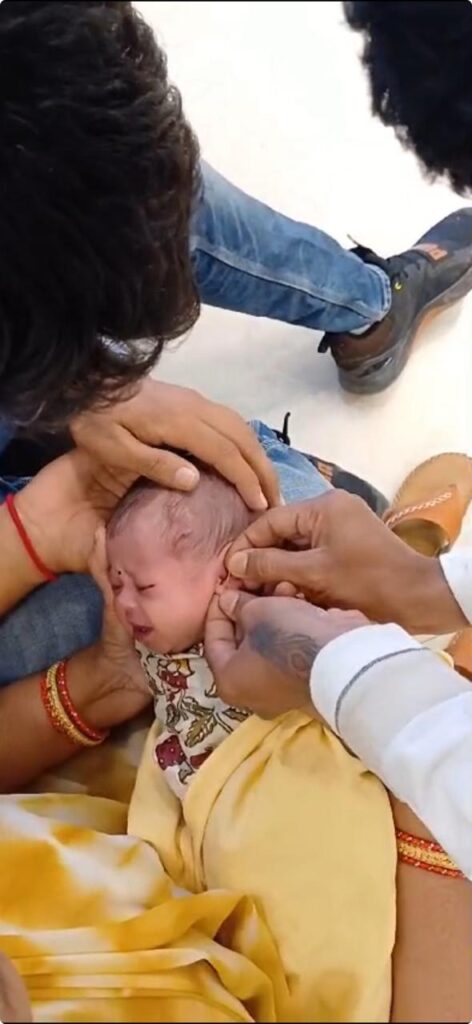
The actual procedure takes place on an auspicious day, usually when the child is around 10 days old. If the ceremony is conducted after this period, it is usually done in the odd years, e.g. one year old, three years old etc.
It is advised to pierce the ears before the child turns one year old, as the sensory organs have not fully developed by this period, and they would not feel as much pain. During the ceremony, the child is held in the lap of the maternal uncle, and the ears are first pierced right to left on boys and left to right on girls, as the left side represents the feminine side, and the right side the masculine side.
First Feeding
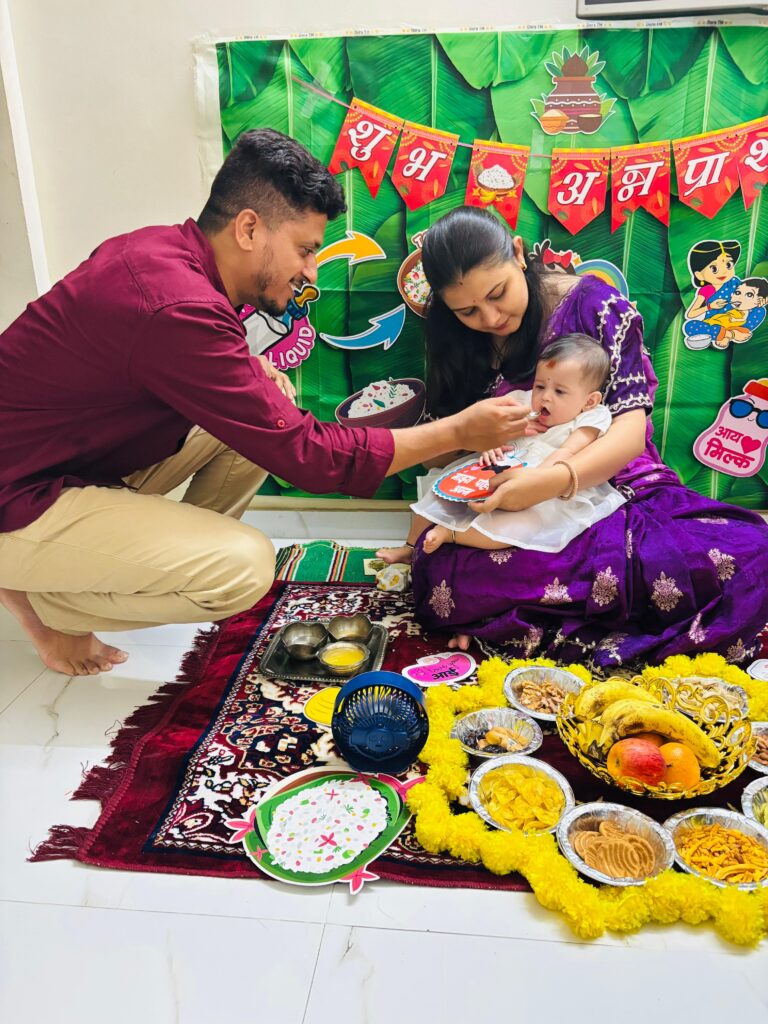
The first feeding, otherwise known as Annaprashan, is celebrated pan India as the first feeding of the baby.
It signifies the growth and maturing of the infant, as it is now ready to eat solid food, after being on a diet of solely milk. It is a joyous occasion aside from being a major milestone in the baby’s development, and a gateway for strength, happiness, abundance and hope.
Although the customs vary, in GSB tradition, the child is fed boiled rice, sometimes mixed with ghee, or clarified butter. The ritual is typically performed on even months for boys, and odd months for girls, and usually when the infant is 6 months or older, as they by then have developed enough to eat the solid food.